Is this an ecommerce agency brief?
When the job is retail, yes — connect inventory and storefront. We do not sell a theme or a platform swap as the default.
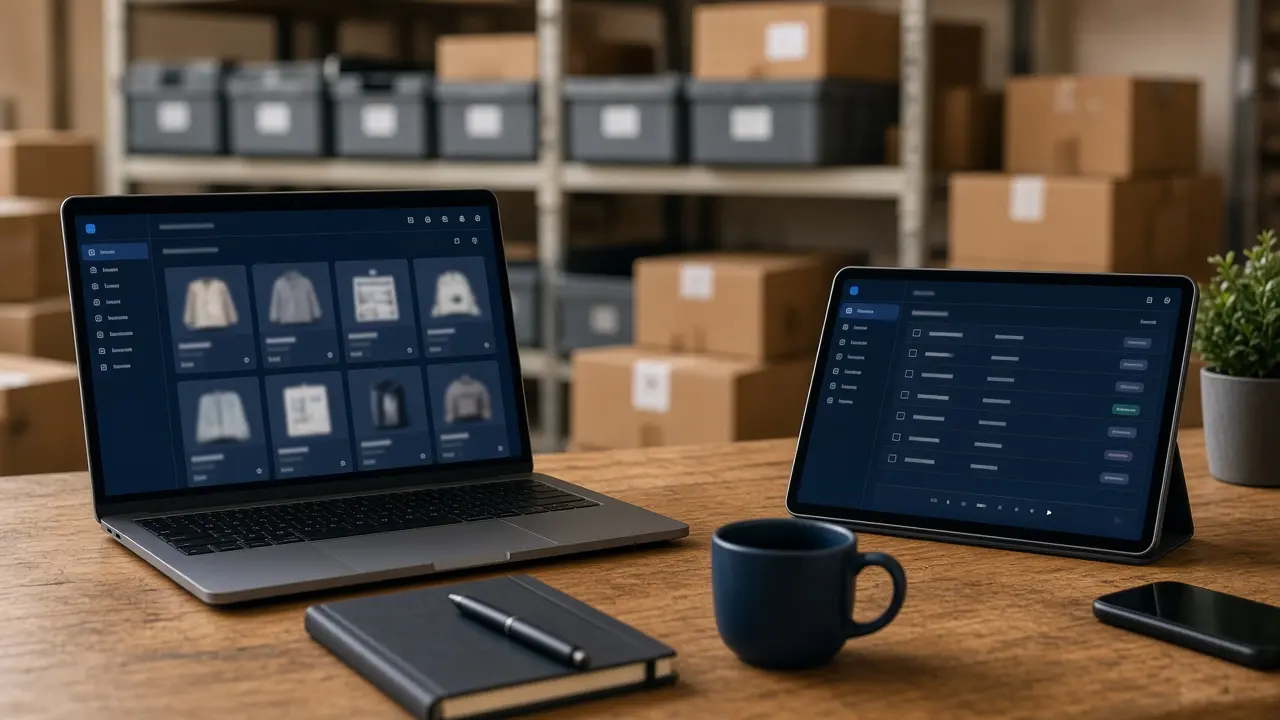
Retail
Inventory in one system, storefront in another. Connect them. Leave merchandising a tool they own.
In short
Velosius builds retail systems for mid-market operators whose inventory and storefront still disagree. Inventory stays the system of record. Channels read one catalogue. Elena Voss leads commerce programmes. We do not sell a storefront rewrite for its own sake.
Retail and consumer operators whose promotions, stock, or channel prices still need a ticket — and merchandising cannot change a price without engineering on the thread.
We will not rebuild a working storefront because a proposal asked for a new platform, and we will not take a D2C brief that only needs a theme.
Mid-market retail is not a missing storefront. It is two systems that were never meant to share a catalogue: stock and price in the ERP, merchandising on the channel, and a promotion that waits on a ticket. Retail systems in this studio means that connection, plus a tool merchandising can run on Monday.
If the storefront has quietly become a second catalogue, the integration is the project. Personalisation sits on top of the catalogue. It does not replace it.
The channel is not the system of record. Availability, price, and the promotion calendar belong where merchandising already closes. Storefronts, marketplaces, and stores read that path. They do not invent their own.
A platform swap is the exception: only when the current storefront cannot carry the catalogue path. Elena Voss will say connect, buy, or stop on the first call.
Elena Voss leads product and commerce. You brief the person who will cut the catalogue path, not a slide team that hands the work to a junior bench after kickoff. The first 90 days leave merchandising a change they own — or we have not finished.
Programme lead: Elena Voss.
Commercial page
Ecommerce ERP integration for mid-market retail. Inventory stays the system of record; merchandising runs one catalogue without a ticket.
Work snapshot
A US retailer had inventory in one system and the storefront in another. We connected the two with an API layer and a personalisation engine the merchandising team could run themselves. Field note: ecommerce ERP integration.
One catalogue, every channel
Longer field note: Ecommerce ERP integration: one catalogue, every channel.
FAQ
When the job is retail, yes — connect inventory and storefront. We do not sell a theme or a platform swap as the default.
Merchandising. If they still need engineering to change a promotion, the retail system is not finished.
Elena Voss. Send the two systems that disagree and the change merchandising cannot make today.
Next step
Send the loop that fails on Monday, the systems it must touch, and the constraint you cannot break. We will say build, connect, or stop.