Is this an ecommerce rebuild?
No. Ecommerce ERP integration connects what you have. A rewrite for its own sake is how programmes stall.
Commerce
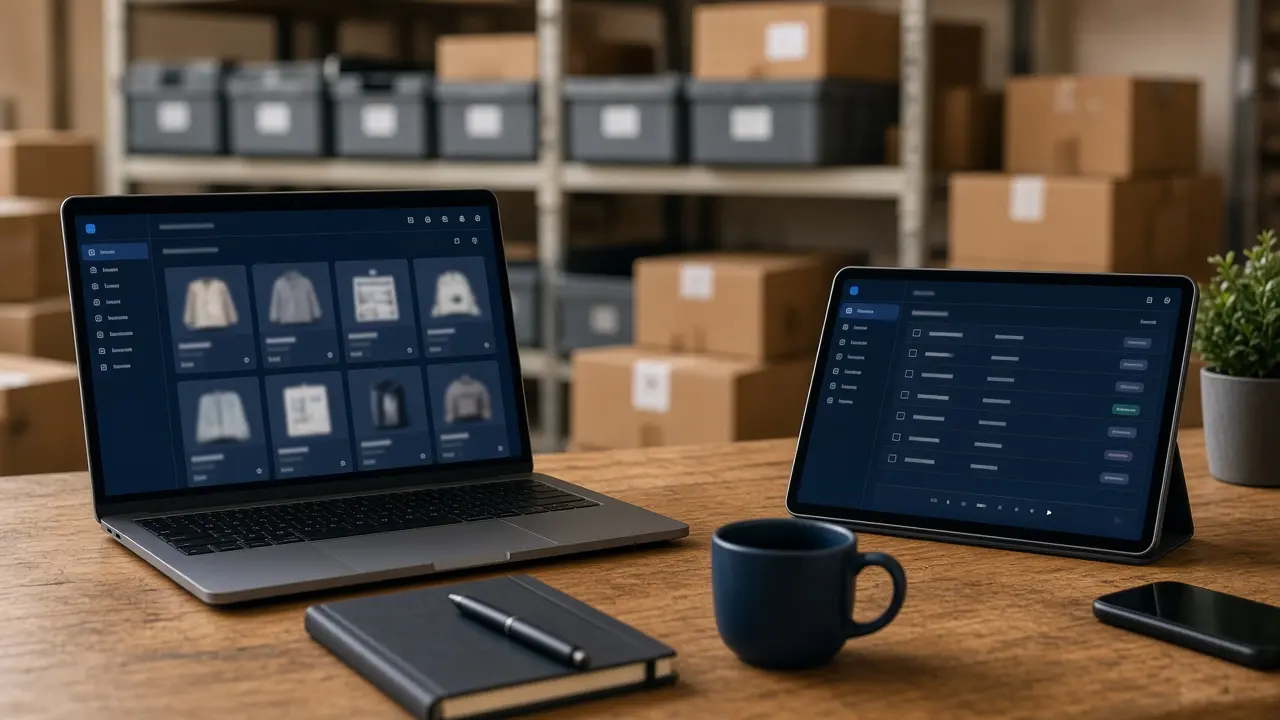
Inventory in one system, storefront in another. Connect them. Leave merchandising a tool they own.
In short
Ecommerce ERP integration at Velosius connects inventory and storefront so one catalogue reaches every channel. Inventory stays the system of record. We do not sell a platform rewrite for its own sake.
Retail and consumer operators whose promotions, stock, or channel prices still need a ticket to change.
We will not rebuild a working storefront because a slide asked for a new platform, and we will not make the storefront the system of record.
Retail programmes stall when the storefront becomes a second catalogue. Stock, price, and availability belong in the system merchandising already closes. Channels read that catalogue. They do not invent their own.
The failure mode we see is ordinary: inventory in one system, the storefront in another, and a promotion that needs a ticket to change. Ecommerce ERP integration is that connection, plus a tool merchandising can run without engineering on the thread.
One catalogue, every channel. A merchandiser can change a price or a promotion and see it land without opening a ticket. If they still need a developer for a routine change, the integration is not finished, whatever the architecture slide says.
Personalisation sits on top of that catalogue. It does not replace it. Operators need a path they own; a model that merchandising cannot override is another black box.
A storefront rebuild is justified when the current one cannot carry the catalogue path, not because a proposal asked for a new platform. We will say buy, connect, or stop. Elena Voss leads commerce programmes.
Work snapshot
A US retailer had inventory in one system and the storefront in another. We connected the two with an API layer and a personalisation engine the merchandising team could run themselves. Field note: ecommerce ERP integration.
One catalogue, every channel
Industry page: Retail systems.
Longer field note: Ecommerce ERP integration: one catalogue, every channel.
FAQ
No. Ecommerce ERP integration connects what you have. A rewrite for its own sake is how programmes stall.
Merchandising. If they still need a ticket to change a promotion, the integration is not finished.
When the job is retail, yes — connect inventory and storefront. We do not sell a platform swap as the default.
Next step
Send the workflow, the systems it must touch, and the constraint you cannot break. We will say build, buy, or stop.